
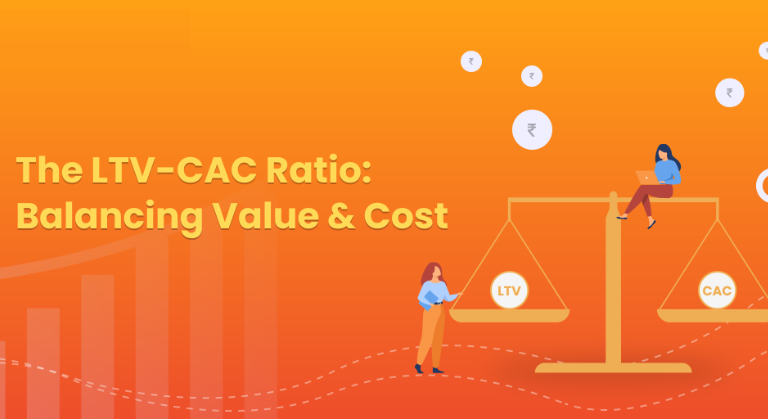
In today’s competitive business landscape, understanding the dynamics of Customer Acquisition Cost (CAC) and Lifetime Value (LTV) is essential for sustainable growth. These metrics provide deep insights into how much a business invests in attracting customers and the returns generated over the customer’s lifecycle. By managing CAC and maximizing LTV, companies can ensure long-term success and strengthen their market position. Let’s dive into how these factors contribute to business profitability and how addressing market failures can refine strategies.
Key Highlights of CAC and LTV
- Customer Acquisition Cost (CAC): CAC represents the cost of bringing in a new customer, encompassing expenses related to marketing, sales, and advertising. Monitoring CAC allows businesses to optimize their marketing spend, ensuring they attract customers efficiently. Lowering CAC without compromising quality not only improves profit margins but also frees up funds for reinvestment in business expansion.
- Lifetime Value (LTV): LTV refers to the total revenue a customer is expected to generate over their relationship with a business. By understanding LTV, companies can forecast long-term revenue and make informed investment decisions. Increasing LTV often involves enhancing customer retention, repeat purchases, and customer satisfaction—elements that fuel sustainable growth.
- Addressing Market Failures: Identifying market failures, such as misaligned products or unmet customer expectations, is crucial for tailoring strategies to customer needs. By addressing these gaps, businesses can avoid wasted resources, improve customer engagement, and increase conversion rates. Market analysis helps companies better position their products and services, making their offerings more appealing and relevant.
Practical Strategies for CAC and LTV Optimization
- Invest in Customer Retention: Retaining customers is generally more cost-effective than acquiring new ones. Businesses should prioritize customer service, loyalty programs, and personalized experiences to foster long-term relationships. A loyal customer base reduces CAC and increases LTV through repeat purchases and word-of-mouth referrals.
- Optimize Marketing Channels: Not all marketing channels perform equally. By evaluating which channels provide the best return on investment, businesses can focus on high-performing platforms, thereby reducing CAC. Analyzing data from various campaigns allows for budget allocation to the most cost-effective channels.
- Balance CAC and LTV: The relationship between CAC and LTV is crucial. If CAC exceeds LTV, the business may struggle with profitability. Companies should aim for a low CAC and a high LTV balance, ensuring that the cost of acquiring a customer does not surpass the revenue they bring in over time.
- Enhance Customer Experience: High-quality interactions lead to better customer satisfaction, which translates into higher LTV. Focusing on customer experience at every touchpoint, from pre-purchase to post-purchase support, builds loyalty and encourages repeat business.
Benefits of a Strong CAC-LTV Strategy
- Improved Financial Health: Optimizing CAC and LTV means businesses can generate more revenue per customer without overspending on acquisition costs, ensuring healthier cash flow and profitability.
- Better Market Position: Companies with balanced CAC and LTV metrics are more adaptable to market changes, allowing them to remain competitive and relevant in a rapidly evolving environment.
- Sustainable Growth: By prioritizing long-term relationships over quick wins, businesses can establish a stable customer base, ensuring predictable revenue streams and setting the foundation for scalable growth.
- Enhanced Customer Loyalty: A strategic focus on LTV encourages businesses to build lasting relationships, driving loyalty, and reducing churn rates, which ultimately strengthens the brand.
- Data-Driven Investment Decisions: CAC and LTV insights provide businesses with the data needed for smart investment, making resource allocation efficient and supporting overall growth.
Conclusion
Mastering CAC and LTV is more than a numbers game; it’s about aligning business practices with customer needs and market realities. A well-thought-out strategy that optimizes these metrics unlocks untapped potential, making businesses not only more profitable but also more resilient. By investing in customer relationships, refining marketing tactics, and responding to market dynamics, companies can ensure lasting success in a competitive environment.
As businesses continue to refine their approach to customer acquisition and retention, they pave the way for sustainable growth, empowered by a strategic understanding of CAC and LTV. Embracing these metrics doesn’t just lead to profitability; it drives the whole business forward, one loyal customer at a time.